
Written by Max Veenhuyzen
Sprawled across more than four hectares, this facility in WA’s sheep farming heartland the largest undercover saleyards in the Southern Hemisphere.
At 6am every Wednesday, buyers begin to arrive at the regional sheep saleyards in Katanning: a state-of-the-art livestock handling facility hidden in plain sight on the Katanning-Nyabing Road just outside of town.
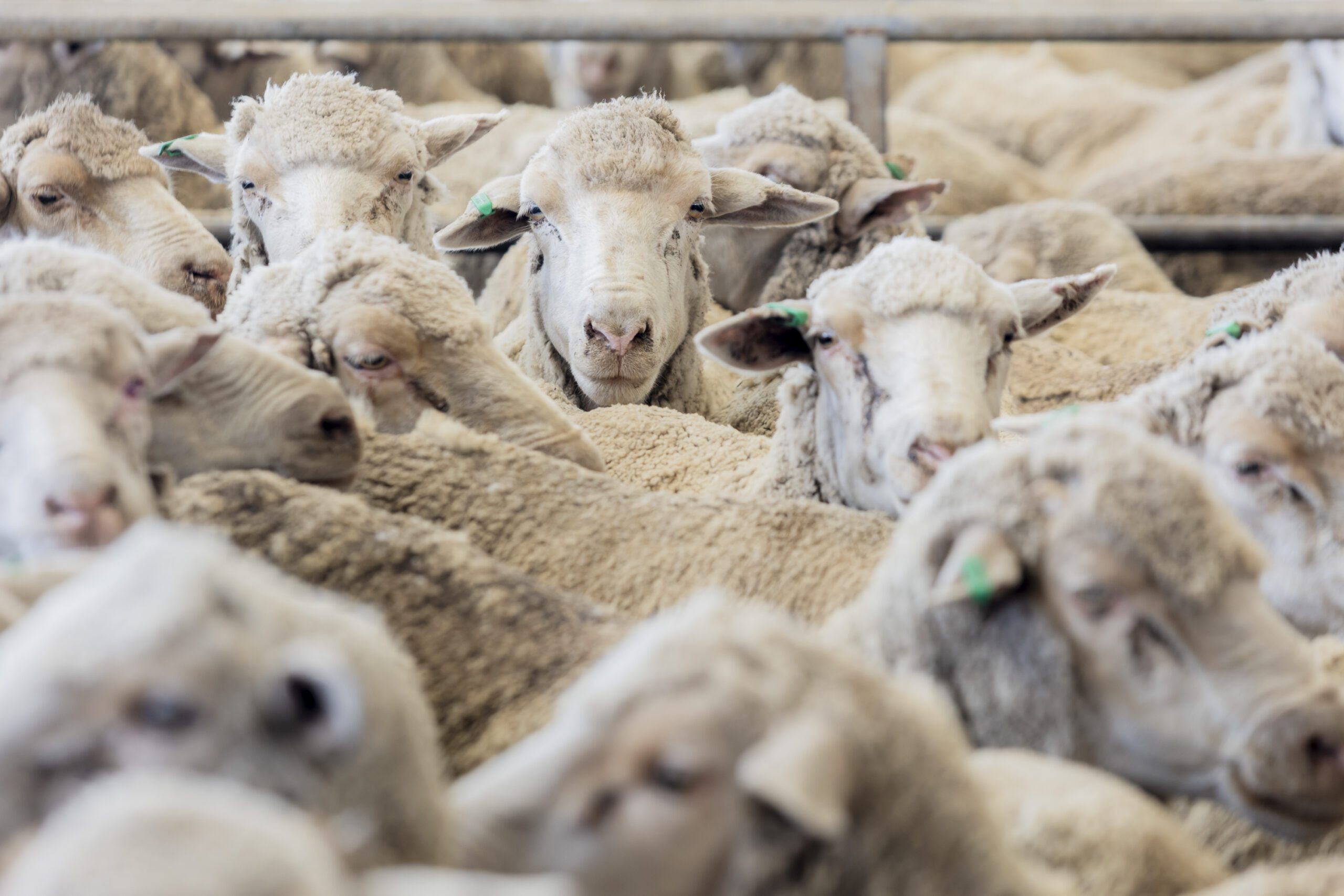
If you ever wanted to create an air freshener that smelled like “farm”, this would be a fine Point A for market research and aroma development. Despite being one of the saleyards’ quieter days – when I visit in late January, the yards only handle 11,800 of the potential 26,000 sheep that it can do in a single day – that unmistakable barnyard scent is everywhere. Although Wednesday is sale day and when most of the yards’ visitors pass through, all the stock is loaded the day before and spend the night in one of 1008 sales pens. I’ll let you do the going-to-the-toilet maths.
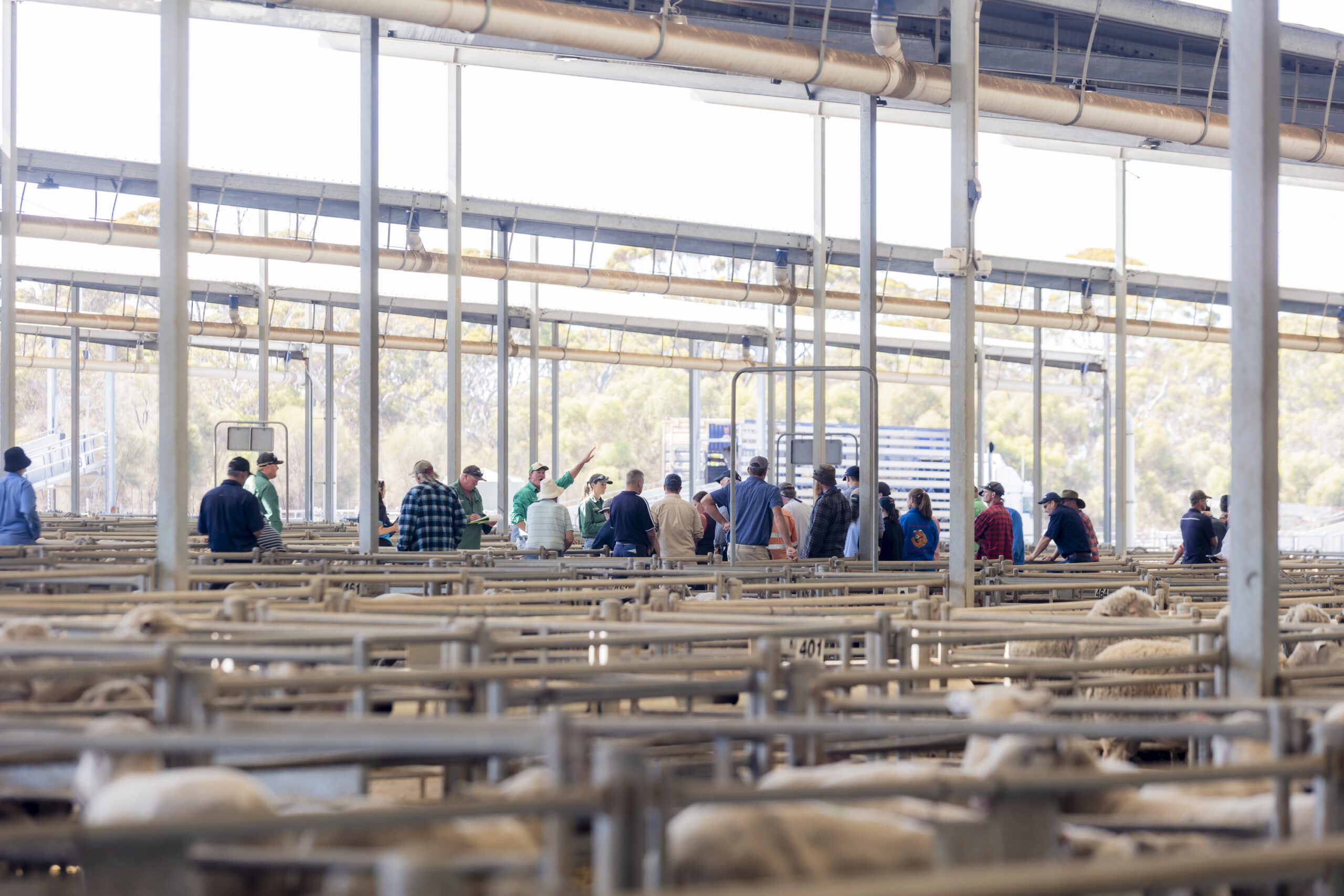
I’ll also let you try to imagine the sheer scale of the operation. Opened in 2014, these saleyards are the largest undercover saleyards in the Southern Hemisphere and feature more than four hectares of roofing. In addition to everything that’s overhead, the yards have also been laid with six hectares of tarmac: essential infrastructure for the trucks that transport all this livestock. week-in and week-out.
Katanning wasn’t always a one sheep saleyard town. In the early 1900s, regional livestock sales were spread across four locations and also feature cattle and horses alongside sheep. After calls from the public to move sales activities away from homes and residential areas, Katanning’s municipal saleyards opened in 1939 on Friday October 13th, consolidating all these smaller operations in one place.
Despite this ominous birthday, these saleyards ran for almost 75 years before passing the baton to its successor. Although “the Southern Hemisphere’s biggest undercover saleyards” has a nice ring to it, upgrading facilities was about more than bragging rights. Finding a new home for the saleyards, for instance, has bolstered its sustainability credentials: rooftop solar panels generate electricity while rainwater is also collected and used as drinking water for stock and for washing trucks.
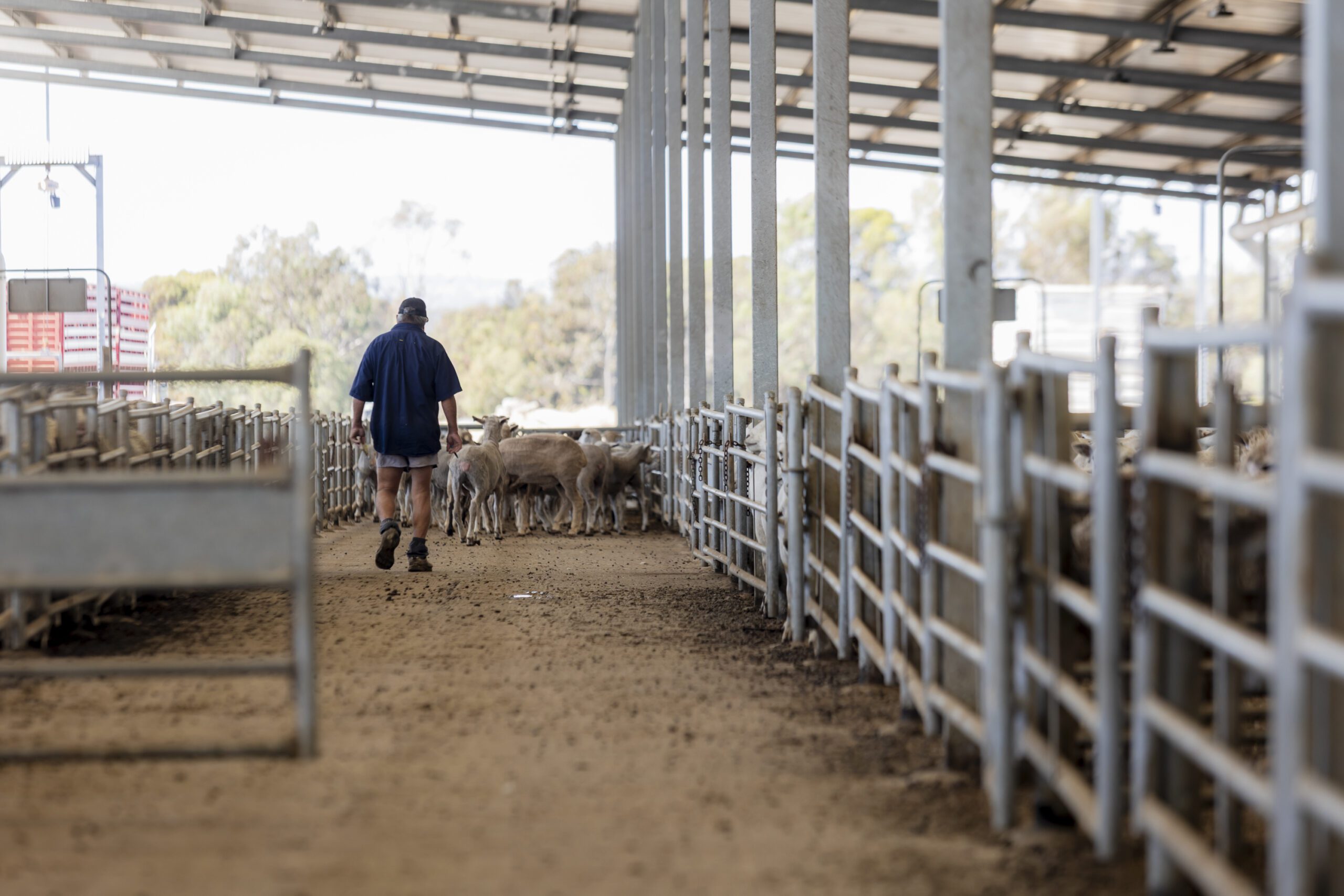
All that shade also translates to better conditions for staff and for stock – particularly over summer – plus local Katanning trades and businesses helped complete the project on-time and for significantly less money than initial estimates. And did I mention the canteen where local caterer Kim Kowald slings bacon and egg rolls and cuppas? (She also does Thursdays at the Katanning Country Club, incidentally.)
For anyone with an interest in food provenance or agriculture – or, even better, both –a Wednesday morning visit to the saleyards has much to offer. Closed shoes are a must and catching most of the action may require setting an alarm for earlier than usual. (The sale kicks off at 8:30am sharp.) It might also require striking up conversations with strangers, asking questions and potentially outing yourself as a city slicker trying to better understand farming life.
If you’re lucky, a patient stockman or retired farmer will take some time out of their morning to show you the ropes, share some homespun wisdom and give you a local’s perspective on Katanning. More importantly, their quiet kindness will act as a reminder that although heads and tonnage are the metrics of farming, it’s the people that put the heart in heartlands.